

Vertical Sky Component (VSC) is a measure of the amount of diffuse light reaching a vertical surface, such as a window or facade, from the visible sky. Expressed as a percentage, VSC compares the daylight available at a specific point to the amount that would be received assuming a fully unobstructed view of the sky. A higher VSC value indicates greater visibility of the sky and generally corresponds to better daylight availability, while lower values indicate more restricted access to daylight.
VSC is commonly used in early stage design to compare massing options and help guide daylight planning decisions. In many jurisdictions, planning guidance includes recommended VSC thresholds or limits for new and existing windows. For example, BRE (Building Research Establishment) guidelines suggest a VSC of 27% or greater allows adequate daylight through standard window designs.
What is it measuring?
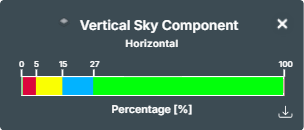
The vertical sky component color scale indicates the percentage of visible sky compared to an unobstructed view from a given surface. Color scale sections correspond to BRE guideline ranges between 5%, 15%, and 27% thresholds.
What options can I specify?
There are no user specifications for sky view factor, it is entirely geometry driven.